
Cheaper to Operate
Charging an Electric Vehicle (EV) is cheaper than filling up a gasoline or diesel powered car! Forget trying to book those oil changes into your already jam-packed schedule because EVs require less maintenance!
No More Gas Stations
No need to fill up in the midst of a snow storm when you can just plug in your EV at home!
Environmentally-friendly
EVs have no exhaust coming from a tailpipe!
Vroom! Vroom!
You might struggle to hear an electric vehicle start as they are are quieter & smoother than gasoline-powered engines, without compromising the get-up-and-go of a gas engine!
EV Brochure
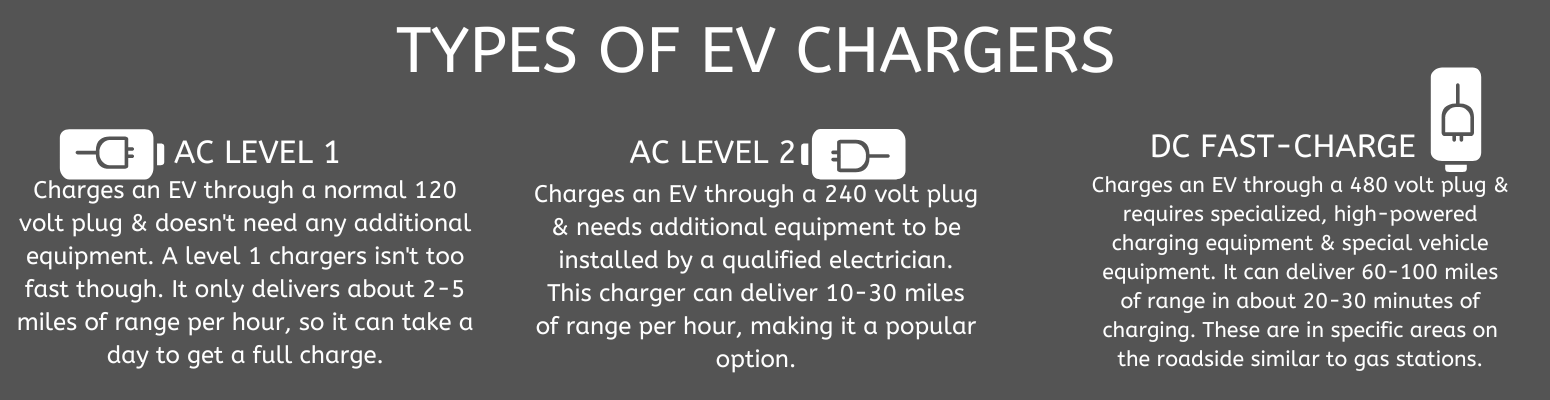
Learn more about electric vehicle charging at home, free charging station from Barron Electric, and electric vehicle charging on the go! Barron Electric has joined with other cooperatives to develop Levels 2 and 3 charging stations within cooperative service territories.
Check out charge.coop

EV FAQs
There are various electric vehicle types available; the most common are:
Battery Electric Vehicles
These vehicles come equipped with a battery and an electric motor instead of a gas tank. They run entirely on electricity and do not produce any exhaust.
Plug-in Hybrid Electric Vehicles
An electric motor AND a gas-powered internal combustion engine power these vehicles. Some plug-in hybrids will primary use electricity until the battery is almost depleted, then the gasoline-powered engine kicks in. Like the all electric vehicles, they are plugged in when the vehicle is not in use to recharge the battery.
Hybrid Electric Vehicles
These vehicles feature an electric motor AND a gas-powered internal combustion engine and DON'T plug-in for charging. Hybrid Electric Vehicles (HEVs) can have substantial range on a single tank of gas, BUT they still burn fossil fuel, produce carbon emissions, require trips to the gas station and scheduled engine maintenance.
Evs are definitely more energy efficient than internal combustion engines. Here's why:
- Electric motors are more efficient in converting stored energy into momentum
- Evs do not consume energy while at rest or coasting
- EVs have regenerative braking that can be used to re-capture energy
Electricity is less expensive than gasoline. Also, electricity prices are generally more consistent than gasoline prices, which makes a huge difference when it comes to budgeting. Averages on the national level indicate it costs less than 1/2 as much to travel the same distance in an EV as it does in a gas vehicle.
EV batteries are typically designed to last for the life of the vehicle and have a very low failure rate. However, like any engine, the type of battery and how the vehicle is driven are important to consider.
With fewer moving parts to maintain and fluids to change, EVs require significantly less maintenance than gas-powered motors. Due to EVs regenerative braking system, the brakes typically last longer than on traditional vehicles.